


Kenya’s rich biodiversity (spanning forests, rangelands, wetlands, and marine ecosystems) is one of the country’s greatest assets, yet is under growing pressure from a convergence of human and environmental stressors. Rapid population growth, unharmonized and weakly enforced cross-border conservation laws, competing land uses, over-exploitation of natural resources, unsustainable recreational activities, and accelerating deforestation are steadily eroding ecosystems and the services they provide. These challenges are further amplified by climate change, which is intensifying environmental degradation, undermining livelihoods, and posing serious risks to Kenya’s socio-economic development and ecological resilience. Nature-based solutions (NbS) are emerging as a powerful and practical pathway for Kenya to confront these intertwined challenges. Increasingly recognized as central to achieving the Sustainable Development Goals (SDGs), NbS offer an integrated response to the triple crisis of biodiversity loss, climate change, and environmental pollution. They have the potential to effectively address diverse challenges such as climate change, food and water insecurity, disaster impacts, and threats to human health and well-being, while reducing environmental degradation and biodiversity loss.

Story by Tessie Akoko, Dorcas Jalango, Brenda Binge, Chris Ngige, originally published on the Alliance of Bioversity International and CIAT website.
MoALD in collaboration with the Alliance of Bioversity International and CIAT under the CGIAR Climate Action Science Program, piloted a national NbS monitoring and evaluation (M&E) framework in Kenya’s Chyulu Hills to track ecosystem restoration and climate resilience. This was achieved as part of an Initiative for Climate Action Transparency (ICAT) project, implemented with the support of UNEP-CCC.
Background
The need for a monitoring and evaluating framework for NbS: A collaborative development process
As nature-based solutions continue to gain traction globally and nationally, an important conversation is emerging around not just scaling them but doing them right. While NbS are widely embraced for their potential to address climate change, biodiversity loss, and ecosystem degradation in an integrated way, there is growing concern that, if poorly designed or inadequately coordinated, NbS interventions can inadvertently harm ecosystems and communities. Good intentions alone are not enough. Without clear standards, coordination, and robust monitoring systems, NbS projects risk delivering sub-optimal outcomes or worse, creating new social and environmental problems. This makes careful design, strong coordination, and continuous monitoring and evaluation not optional, but essential.
Globally, NbS are now a central pillar of climate and development strategies. Approximately 66% of countries that are signatories to the Paris Agreement have incorporated NbS into their Nationally Determined Contributions (NDCs), with 103 countries using NbS primarily as an adaptation tool and a further 27 integrating them for mitigation. Kenya is very much part of this global movement. The country’s long-term development and resilience ambitions are anchored in addressing climate change, ecosystem degradation, and biodiversity loss in an integrated manner, and it has made notable progress in embedding NbS within its national policy and planning frameworks.
Kenya’s updated NDC commits the country to reducing greenhouse gas emissions by 32% by 2030 relative to the business-as-usual scenario. This commitment is underpinned by concrete NbS interventions, including the restoration of 5.1 million hectares of degraded landscapes, increasing national forest cover to 10%, and strengthening the protection of critical ecosystems such as water towers, wetlands, and coastal habitats. These ambitions are further reinforced by key policy instruments such as the Kenya National Biodiversity Strategy and Action Plan (NBSAP) 2019-2030 and the Kenya National Adaptation Plan (2015–2030) , which emphasize ecosystem restoration, biodiversity conservation, and the equitable sharing of benefits from ecosystem services.
Collectively, these national policies align closely with global frameworks such as the Kunming-Montreal Global Biodiversity Framework and other international conventions that promote NbS.
However, despite these strong policy commitments and growing investments, a critical gap remains. Kenya currently lacks a dedicated, harmonized system with clear indicators and metrics to track, monitor, and evaluate NbS interventions and their outcomes, particularly in agricultural and productive landscapes where most NbS investments are being made. This gap limits the country’s ability to generate credible evidence, report effectively against national and international commitments, inform policy refinement, and, importantly, mobilize climate and nature finance at scale.
This necessitates a comprehensive NbS monitoring and evaluation (M&E) framework that integrates environmental, social, and economic indicators. In the context of Kenya’s biodiversity hotspots and climate-vulnerable landscapes, such a framework will be critical for systematically identifying, tracking, and assessing NbS interventions aimed at restoring degraded ecosystems, enhancing biodiversity conservation, and strengthening community resilience to climate change.
It is against this background that the Ministry of Agriculture and Livestock Development (MoALD), through its Climate Change Unit (CCU), the Alliance of Bioversity International and CIAT under the CGIAR Climate Action Science Program, and with support from the Initiative for Climate Action Transparency (ICAT) and the UNEP Copenhagen Climate Centre, are co-developing a national NbS M&E framework which aims to strengthen Kenya’s ability to track and report the impacts of nature-based solutions, support MoALD in meeting climate reporting obligations and informing NDC updates, and generate evidence to guide policies that enhance agricultural productivity, ecosystem resilience, and climate adaptation and mitigation. The process has been deliberately inclusive and participatory, built around a series of inception and consultative workshops and structured engagements with development partners, community-based organizations (CBOs), NGOs, academia and research institutions, and private-sector actors.
Piloting the framework: A case study in the Chyulu Hills
The Chyulu Hills exemplifies the close interdependence between biodiversity conservation, ecosystem services, and human well-being. Spanning Makueni, Kajiado, and Taita Taveta counties, the area is one of Kenya’s most important dryland water catchments, feeding key springs and supplying over 30% of Mombasa’s water. The landscape is anchored by Chyulu Hills National Park and is ecologically connected to Amboseli and Tsavo National Parks, as well as surrounding community-managed group ranches. Together, these areas support significant wildlife populations, including elephants and black rhinos, while sustaining agro-pastoralist communities whose livelihoods depend on grazing lands, water resources, and forest products.
Yet, despite its ecological importance, the Chyulu Hills face mounting environmental pressures. Land degradation, forest loss, soil erosion, invasive species, agricultural expansion and illegal logging and charcoal burning are increasingly undermining key ecosystem services such as water regulation, carbon storage, and habitat connectivity. This combination of high ecological value and accelerating degradation makes the Chyulu Hills an especially relevant and strategic setting for testing NbS aimed at landscape restoration and climate resilience.
It is within this context that the Chyulu Hills were selected as the pilot site for the NbS M&E framework.
The primary objective of the pilot was to test whether the proposed indicators and methods are practical, measurable and relevant across complex, multi-use landscapes. The area was also chosen because it hosts several ongoing NbS and conservation initiatives including the Chyulu Hills REDD+ Project and the TWENDE climate adaptation project, providing a strong practical foundation for assessing how the framework performs across different ecological and socio-economic contexts.
The pilot was implemented in Makueni and Kajiado counties. In Kajiado, activities focused on Kajiado South, specifically the wards of Kuku, Kimana, Imbirikani, and Rombo while in Makueni, the exercise covered Thange, Ivingoni, and Makindu wards. Data collection was carried out in close collaboration with county government officials, local administrators, and community leaders, whose support was critical in facilitating access, coordination, and meaningful community engagement throughout the process.
Data collection process
To ensure data quality and enumerator competency, a comprehensive training program was conducted for all data collectors in both counties. The process covered the administration of the household survey through both physical and digital (SurveyCTO) platforms and incorporated practical role-playing exercises to simulate field conditions and standardize data collection protocol.
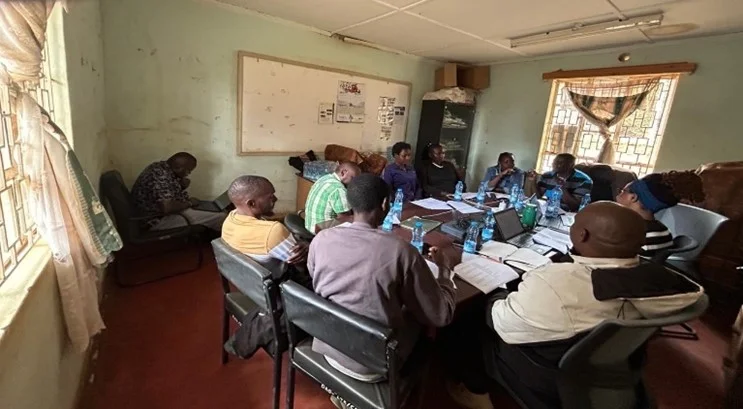
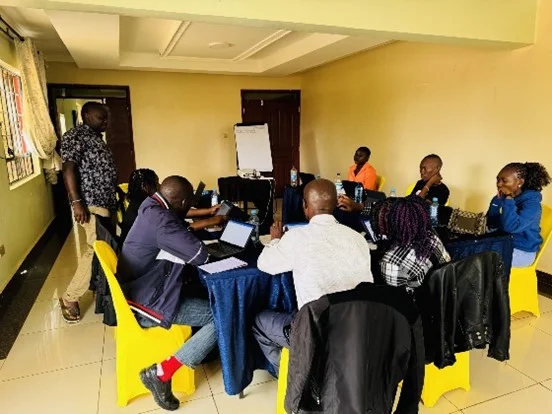
Enumerators Training of the household Survey tool in Kajiado and Makueni Counties
During the household surveys, data collected information on farmers’ socio-economic characteristics and their engagement in nature-based enterprises, crop and land management practices, livestock systems, water and pasture management, and perceived climate and ecosystem impacts.
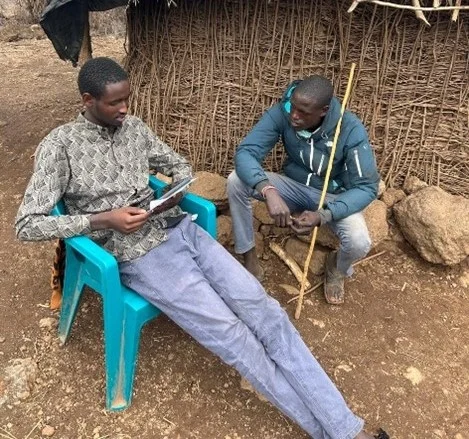
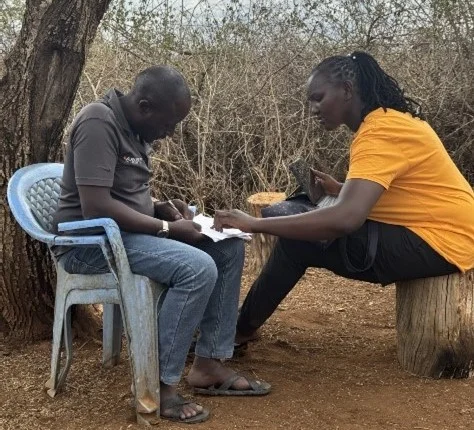
Enumerators engaging the farmers in a household survey
At the community level, four focus group discussions were conducted (each with at least 10 participants, including women, men, elderly and youth). These discussions explored land and water management practices, awareness and adoption of NbS, climate risks, and community governance structures.
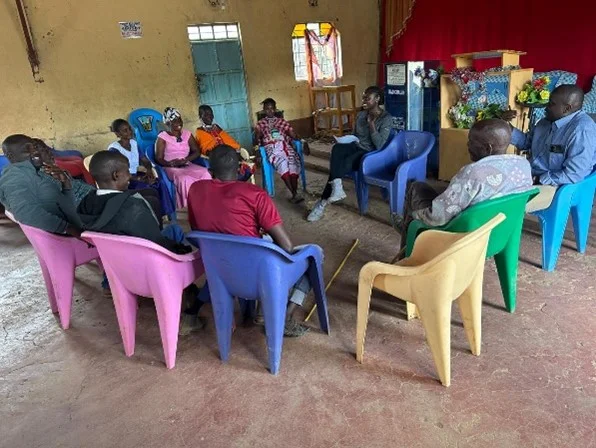
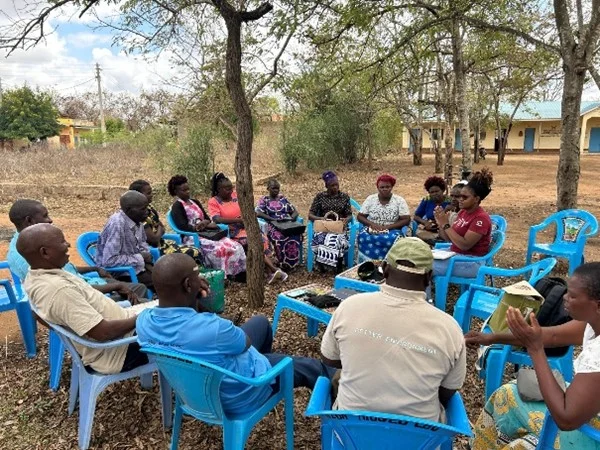
Community members in a focus group discussion
Additionally, ten key informant interviews were held—both virtually and in person—with representatives from NGOs (WWF Kenya, IUCN, Big Life Foundation, Maasai Wilderness Carbon Trust), government agencies (Kenya Wildlife Services (KWS), Kenya Forest Research Institute (KEFRI), Kenya Forest Services (KFS), Kenya Agriculture and Livestock Research Organization (KALRO-KIBOKO)), community-based organizations, and officers from the Ministry of Agriculture and Livestock Development. These experts provided valuable insights on drivers of degradation, restoration initiatives, policies, institutional roles, and environmental enforcement dynamics.
Key insights from the pilot: Thematic findings
The pilot confirmed that NbS are already deeply embedded in local livelihood systems, particularly through soil and water conservation, agroforestry, pasture management, and ecosystem-based livelihood activities such as beekeeping and tree nurseries. Communities clearly recognize the importance of ecosystem conservation for their livelihoods, especially in relation to water availability, grazing resources, and farm productivity. However, the pilot also revealed that while many NbS practices are being implemented, they are often fragmented, small-scale, and not systematically documented, highlighting the importance of a harmonized framework for tracking adoption, performance, and impact.
From an ecological perspective, the pilot confirmed widespread pressure on landscapes from land degradation, deforestation, soil erosion, and encroachment into protected areas, particularly during dry seasons when water and pasture are scarce. Communities reported declining water quality and availability, increased grazing pressure, and more frequent droughts and heat stress. These findings validated the framework’s strong emphasis on indicators related to land condition, vegetation cover, soil and water conservation, and ecosystem service functionality as core components of NbS performance measurement.
Socio-economic findings showed that NbS are not only environmental interventions but also critical livelihood strategies. Many households derive part of their income from nature-based enterprises and climate-smart practices, yet the economic returns remain modest and vulnerable to climate shocks. The pilot highlighted the importance of tracking not just biophysical outcomes, but also livelihood resilience, income diversification, food security, and the distribution of benefits, especially for women and youth, who play a significant role in pasture management, farming, and natural resource-based enterprises.
On governance and institutions, the pilot underscored the central role of community structures, county governments, and local leadership in enabling or constraining NbS success. Community participation in pasture management, grazing agreements, and restoration initiatives was evident, but challenges remain around enforcement, coordination, and conflict over resource access particularly in dry seasons. This strongly validated the inclusion of governance, participation, and institutional coordination indicators in the framework, alongside purely technical or ecological metrics.
Conclusion
Piloting the framework in the Chyulu Hills landscape demonstrated its ability to capture the interconnected ecological, social, economic, and governance dimensions of NbS while remaining practical for use by county governments, project implementers, and communities. The exercise also underscored a critical gap: although NbS practices are widely implemented across Kenya, their impacts are not yet systematically measured or synthesized in ways that can effectively inform policy, investment decisions, and climate reporting, a gap the framework is designed to bridge by linking local action to national and international accountability, including NDC and BTR processes. Importantly, the pilot showed that successful NbS monitoring must be grounded in strong collaboration, with the active involvement of counties, community institutions, and local leaders serving as a foundation for an inclusive, bottom-up approach to scale-up. With lessons from the pilot now informing refinement of the framework, Kenya is well positioned to transition from fragmented NbS efforts to a coherent, nationally anchored system for tracking, learning, and scaling impact.
The latest ICAT project in Kenya aims to develop a nature-based solutions monitoring and evaluation framework aligned with Kenya’s climate-smart agriculture monitoring and evaluation framework, seeking to identify and map relevant nature-based solutions practices in key biodiversity areas, create a national framework with clear metrics for measuring resilience, mitigation, and adaptation, and build stakeholder capacity for data collection and reporting.

Photos by Alliance of Bioversity International and CIAT


Featured Stories
Building Capacity for Greenhouse Gas Reporting in Kenya’s Crop Production
View Story

Andrés Pica Téllez: Chile’s NDC 3.0 Advances Integrated Mitigation and Adaptation Action
View Story

Case study: Enhancing monitoring and evaluation of adaptation responses in South Africa
View Story