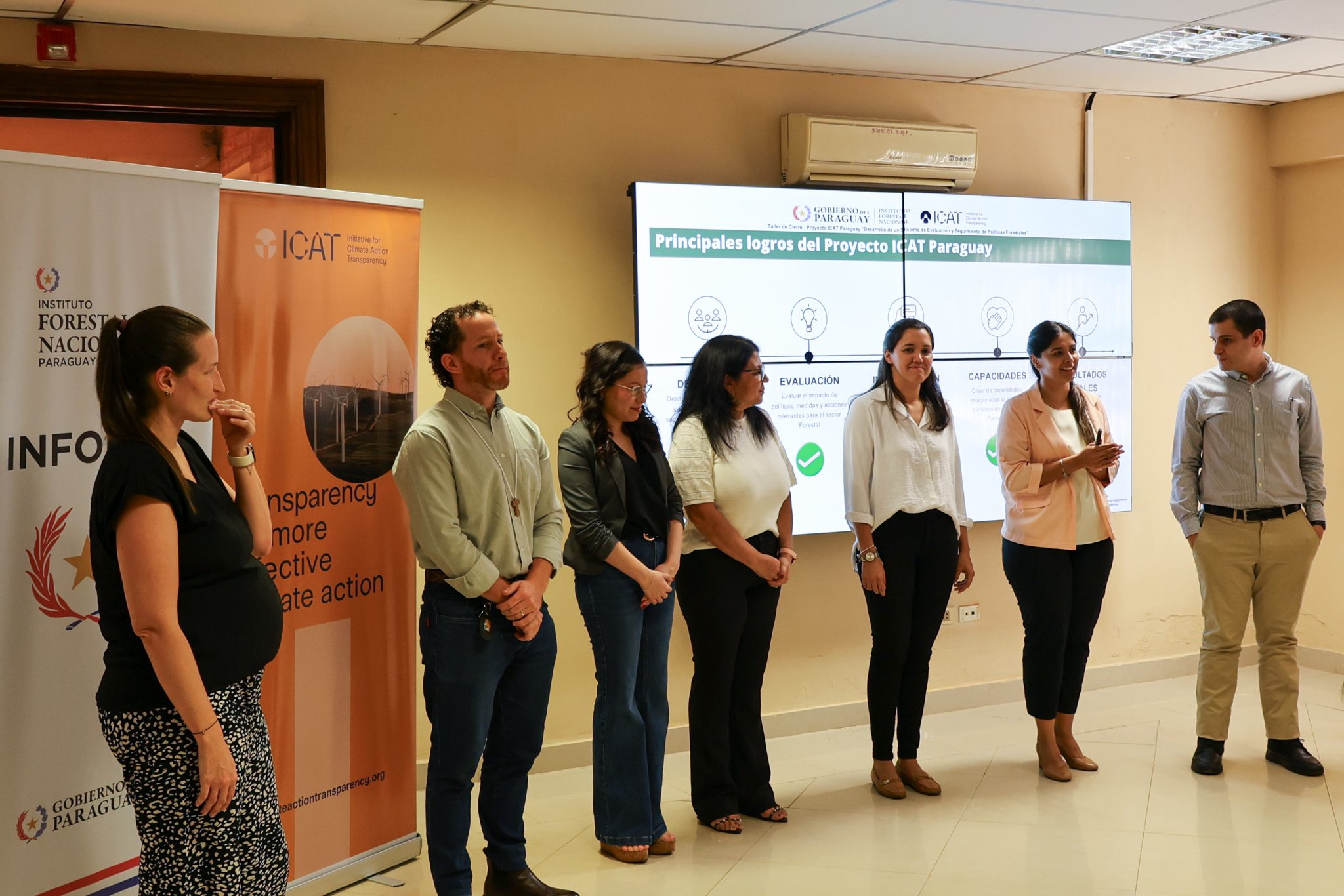
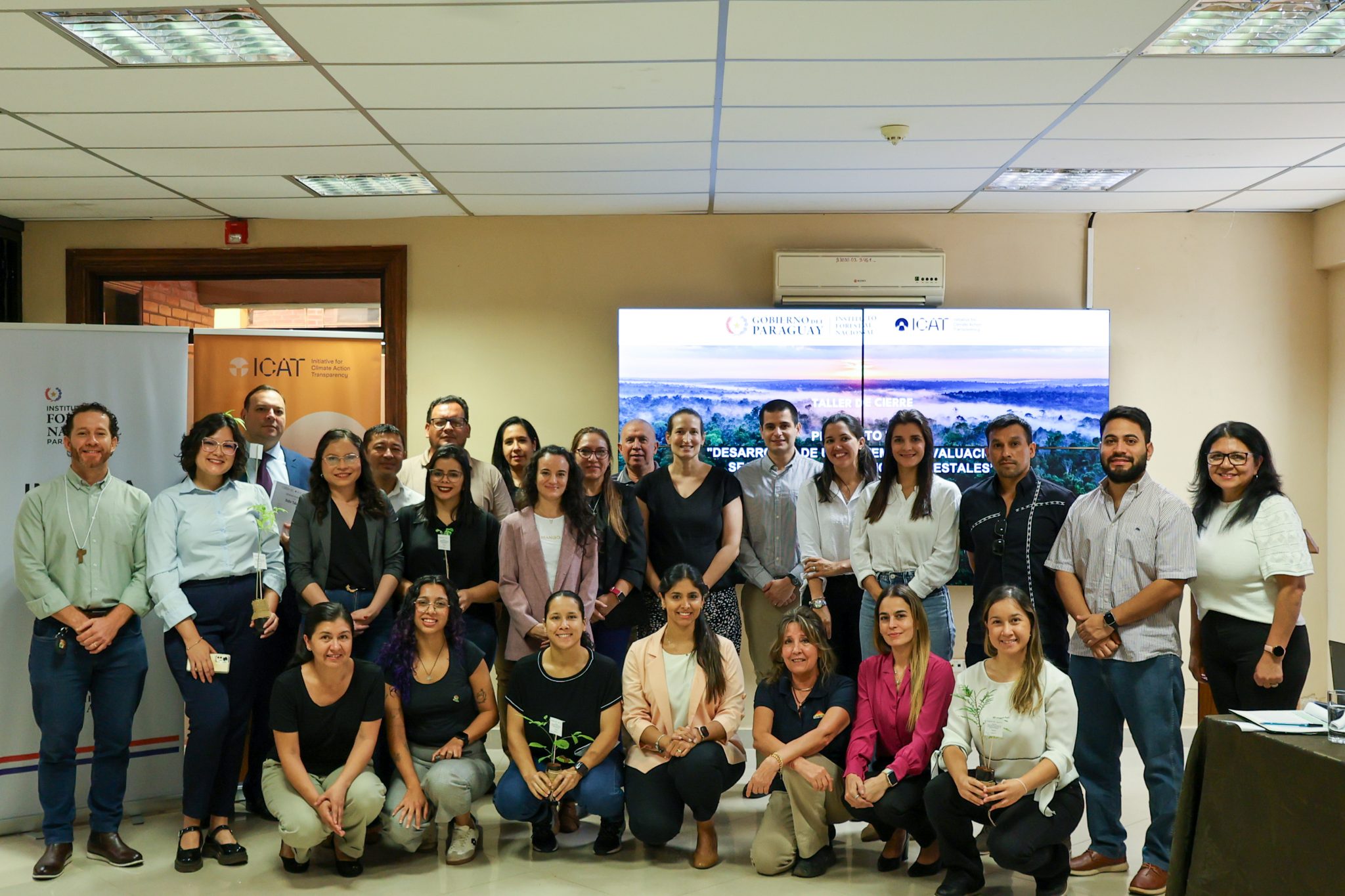
A closing workshop held on 13 March 2026 in San Lorenzo, Paraguay, brought together government officials, forest experts, and project partners to mark the conclusion of an ICAT project focused on the monitoring and evaluation of forest policies. The event offered a space to showcase the project’s results, reflect on lessons learned, and discuss the next steps to ensure sustainability.
The ICAT project, led by the National Forest Institute (Instituto Forestal Nacional-INFONA) with technical support from the Greenhouse Gas Management Institute (GHGMI), aimed to strengthen Paraguay’s ability to track and evaluate the implementation of forest policies and mitigation measures.
A major step forward in forest sector transparency
Through the ICAT project, Paraguay established a system for continuous forest climate data collection and management, and the tools to measure the progress and impact of forest-related actions on greenhouse gas emissions.
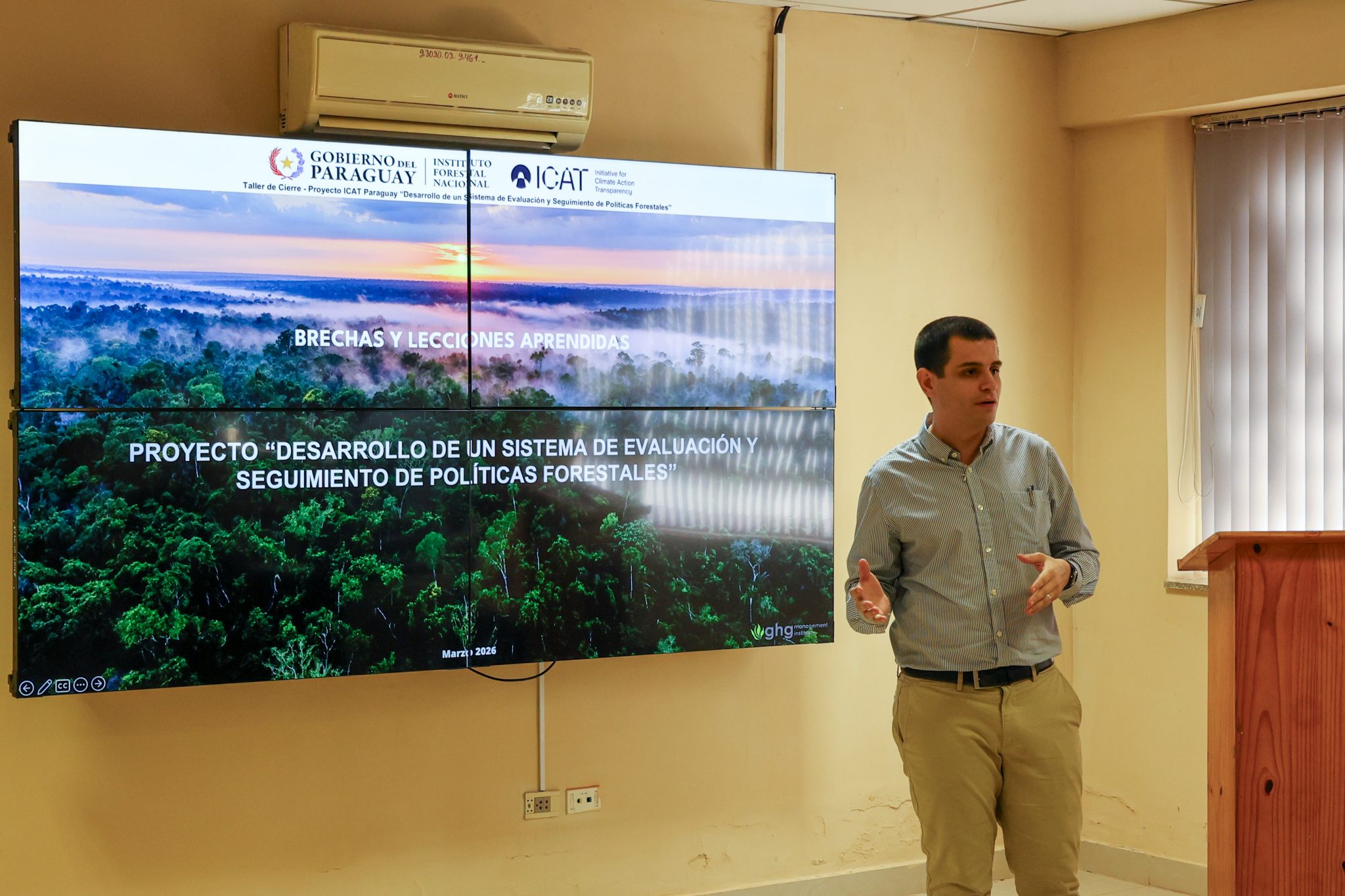
The workshop served as a platform to present and discuss key project results and achievements, including:
- The design of a forest sector monitoring and evaluation system;
- The results of impact assessments conducted for priority forest policies;
- Estimation of greenhouse gas emissions from the forest sector; and
- Projections of future emissions under different policy scenarios to visualize the potential impact of forest sector strategies in the years ahead.
According to the country’s plans, the system developed by the project will be formally institutionalized through an upcoming resolution and the creation of relevant positions within the monitoring department. The evidence base, frameworks and tools developed by the project, validated by national stakeholders, enable Paraguay to improve climate action in the vital forest sector, leveraging accurate and current data.
“Effective implementation of the system makes it possible to generate evidence for decision-making, improves and legitimizes evaluation through the participation of key stakeholders, and strengthens the management of forest policies.” —Aldo Ozuna, Director, Inventory Department, INFONA.
Better forest policies advance Paraguay’s climate vision
Effective forest policies are essential for Paraguay to meet its climate commitments, including the NDC 3.0. The Forestry and Other Land Uses sector is one of the country’s largest emitters, primarily due to land-use changes. The NDC 3.0 seeks to address this by implementing targeted policies and measures, including prohibiting land-use change in the Eastern region, increasing protected areas in the Western region, certifying native forests and introducing sustainable agroforestry systems.
Applying the ICAT Forest Methodology, Paraguay assessed the impacts of some of the main policy instruments in the sector, namely the Regulation of Change of Land Use (Regulación de Cambio de Uso-RCU), commonly known as the Zero Deforestation Law (Ley de Deforestacion Cero), and the Incentive for Forest Plantations (Incentivo a Plantaciones Forestales-IPF). The results of these assessments revealed significant greenhouse gas emission reductions due to reduced large-scale deforestation, in addition to increased greenhouse gas removals through the expansion of planted forests.
Having built the capacity to conduct forest policy impact assessments and established a system to collect and manage data to monitor policy implementation, Paraguay is now equipped to systematically record and monitor forest policy impacts. This will support the continued refinement of policies to help meet mitigation targets and effectively implement the NDC 3.0.
“Having access to national data is essential for informed decision-making. It strengthens climate action and encourages other sectors to conduct policy analyses and monitor the impacts of their actions”—Celeste Gonzalez, Programme Officer, ICAT Secretariat.
Looking ahead: building a sustainable monitoring system
During the workshop, participants provided feedback and suggestions for integrating the system into national transparency processes. The outputs of this project are expected to support evidence-based decision-making, improve reporting on forest sector mitigation actions, and strengthen Paraguay’s ability to track the impact of its policies. This will enable the country to strengthen national policies while meeting its commitments and reporting requirements under the Paris Agreement.