
On 14 October 2025, the Government of Haiti officially launched an ICAT project with an inception workshop held in Port-au-Prince. Representatives from government ministries, civil society organizations, technical experts, and international partners gathered to mark the start of a new phase in Haiti’s efforts to achieve more effective climate action through enhanced transparency.

The ICAT project will help the country strengthen its ability to measure, report, and verify greenhouse gas emissions, track progress on its Nationally Determined Contribution (NDC), and assess the effectiveness of national policies in the key sectors of energy and agriculture.
Speaking at the workshop, His Excellency Moïse Fils Jean-Pierre, Minister of Environment, underscored the vital importance of effective climate action for Haiti, a country highly vulnerable to the impacts of climate change, which faces frequent cyclones, floods, deforestation, and food insecurity. He emphasized that the project represents an important opportunity for Haiti:
This represents an opportunity to strengthen our credibility and position in multilateral negotiations to mobilize essential financial, technical, and technological resources, as well as strategic partnerships to propel the country toward green and sustainable growth.
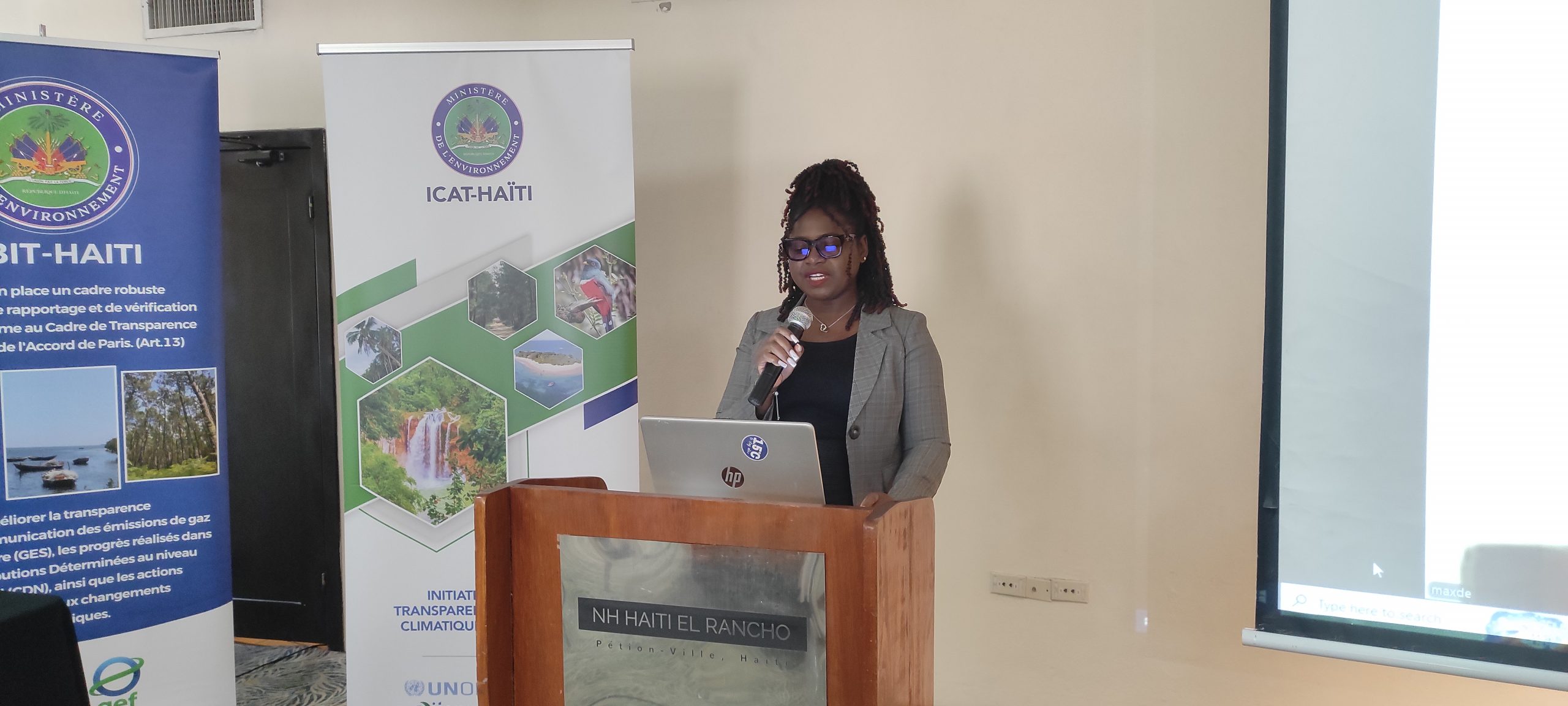
The ICAT project aims to support Haiti in establishing a framework for regularly collecting and managing data, assessing policy impacts, and developing indicators to report progress. More specifically, it will seek to achieve the following key results:
- Improve the existing Measurement, Reporting and Verification (MRV) system and institutional arrangements, including by establishing a legal framework;
- Create an NDC monitoring framework for selected sectors, and enhance capacity to implement and sustain its functionality.
- Develop procedures for the collection, processing, and evaluation of data, based on the MRV and NDC monitoring frameworks;
- Assess the actions, policies, and measures supporting the implementation and achievement of Haiti’s NDC, and strengthen capacity to maintain and update this work.
ICAT Director Henning Wuester highlighted the broader significance of the work launched:
Transparency is more than a reporting requirement under the Paris Agreement; it is a lever for informed decision-making, for evaluating the effectiveness of climate policies, and for mobilizing climate finance. A robust transparency system will enable Haiti to better understand the real impact of its mitigation and adaptation actions, identify areas where efforts need to be intensified, and present reliable and verifiable results to international partners.
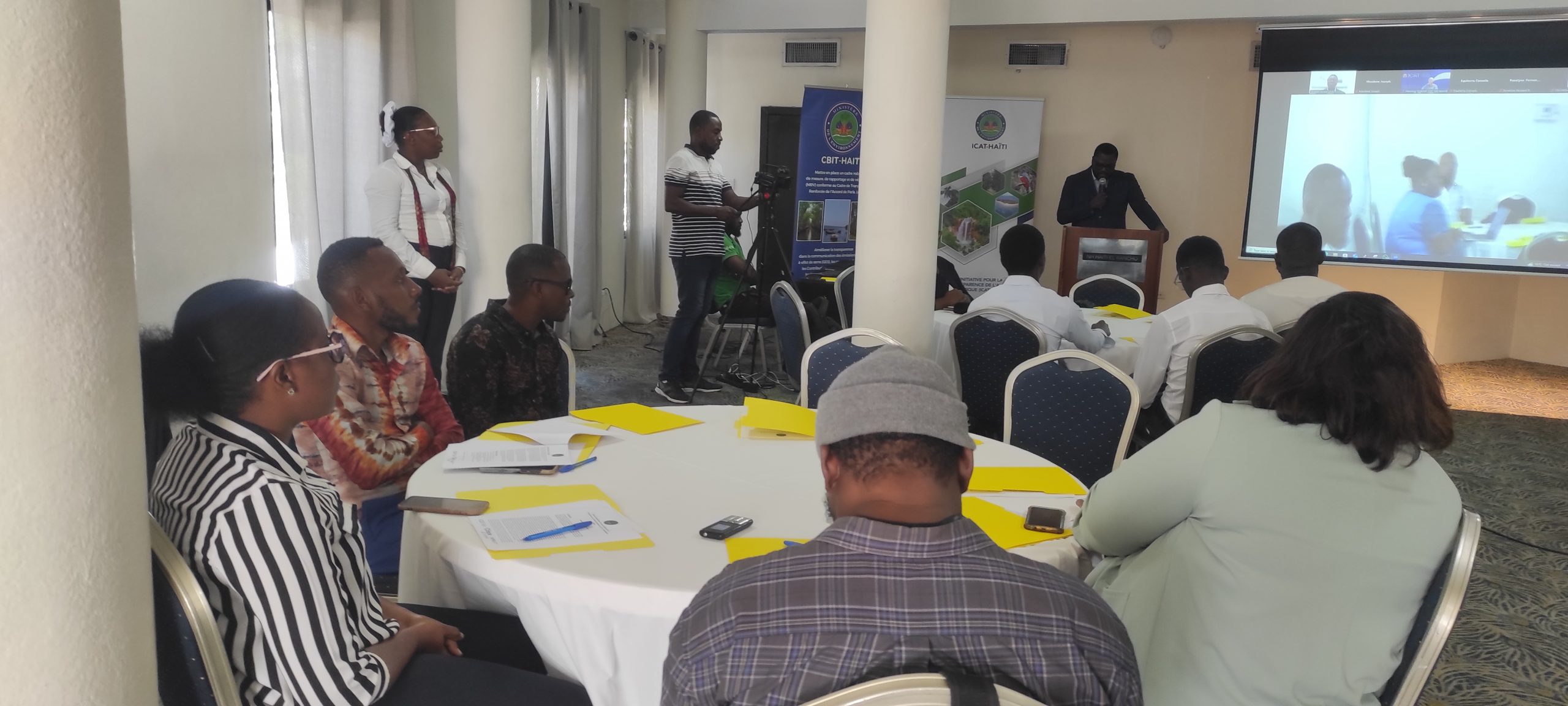
The workshop featured presentations by experts, outlined the project’s technical components and work plan, and offered a space for an open discussion on challenges and opportunities related to data collection, institutional coordination, and long-term capacity building.
The ICAT project in Haiti is led by the Ministry of Environment, with technical support from ICAT’s implementing partners, Citepa and the Greenhouse Gas Management Institute.
17 OCTOBER 2025