



The land use, land-use change, and forestry (LULUCF) sector is one of the most difficult areas of climate action to assess. Landscapes are constantly changing, making it challenging to track how land use and vegetation affect greenhouse gas emissions and removals over time.
For countries across the region, where natural resources are closely linked to climate and development priorities, accurately assessing the sector’s contribution to climate action efforts is a priority. As the region’s countries prepare and begin implementing their third Nationally Determined Contributions (NDCs), focus is increasingly placed on applying effective policies and evaluating their impact.
Central Asian countries have made progress in reporting emissions through greenhouse gas inventories and tracking policies and measures in the LULUCF sector. However, challenges remain, particularly a reliance on default values to estimate emissions and removals from land use due to gaps in historical data. In addition, some countries have yet to establish formal mechanisms and institutional frameworks for climate-related measurement in the sector.
These shared challenges prompted the five member countries of the ICAT Regional Climate Action Transparency Hub for Central Asia to put LULUCF at the centre of regional support in 2025–2026, under the Hub’s overarching focus on supporting countries' NDC 3.0 implementation efforts.
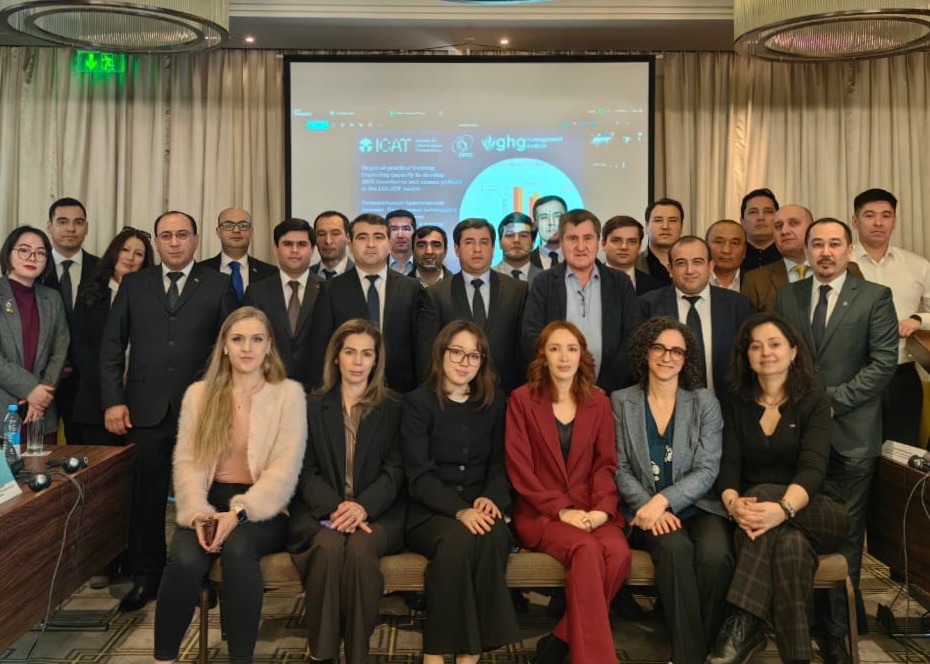 Regional training on strengthening capacity in greenhouse gas inventory development and policy impact assessment in the LULUCF sector, Dushanbe, Tajikistan, 2-5 February 2026. Credit: CAREC
Assessing forest and land-use policies
The Hub brought national experts together to examine their policies and assess their potential climate impacts in a process designed to build capacity through peer learning.
At the first stage, experts compiled their countries’ national forestry and land-use policies and shared them with their regional peers. Reviewing each other’s policy frameworks allowed teams to see how neighbouring countries were addressing similar environmental challenges and exchange practical experience.
When national teams met in technical workshops organized by the Hub, international experts from ICAT’s partner institution, the Greenhouse Gas Management Institute (GHGMI), guided them through the ICAT Forest Methodology. Designed to support evidence-based decision-making, the methodology helps countries assess policy impacts and improve policy design and implementation.
The assessments of the Central Asian policies identified barriers, including limited interagency coordination and fragmented data on land degradation and forest health, that prevented forestry and land-use policies from achieving their intended results. With this qualitative baseline in place, experts then used the data and insights obtained to apply the Environmental Externalities Accounting Tool (EX-ACT), developed by the UN Food and Agriculture Organization (FAO), and estimate the mitigation potential of sectoral policies.
“Experience exchange and joint practical work within regional trainings contribute to strengthening the capacity of Central Asian countries in the field of climate reporting” – Mergen Kepbanov, Director of the CAREC Project Office in Turkmenistan, at a regional training in Dushanbe, Tajikistan, in February 2026.
Identifying mitigation potential and barriers
In Kazakhstan and Uzbekistan, the assessment revealed significant emissions-reduction potential in the LULUCF sector, mainly through large-scale afforestation and reforestation measures. In Kazakhstan, measures on sustainable forest management, perennial crop management, agriculture and pasture showed moderate impact. In Kyrgyzstan and Turkmenistan, the results showed moderate or limited potential for emissions reductions. However, limited data availability constrained the assessment.
Across Central Asia, a consistent trend is observed: while the LULUCF sector has high potential, especially through afforestation, systemic constraints persist in data availability, methodological consistency and institutional capacity. Many estimates rely on assumptions and standard coefficients, and measurement, reporting and verification systems remain underdeveloped or fragmented. The assessments also highlighted an imbalance in the measures being considered, with a strong focus on forestry and less attention to agriculture and land management.
Across the countries, improving data availability and quality, strengthening institutional coordination and establishing regular monitoring and evaluation frameworks emerged as common priorities.
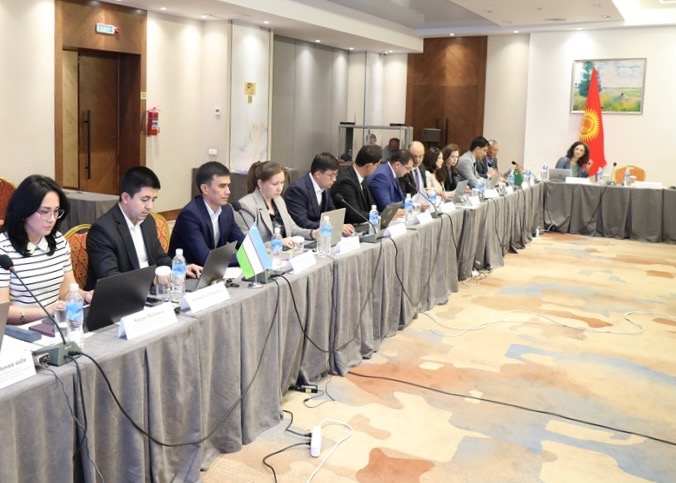 Photo: Regional training on strengthening capacity in greenhouse gas inventory development and policy impact assessment in the LULUCF sector, Bishkek, Kyrgyzstan, 6-10 October 2025. Credit: CAREC
Building shared capacity and peer-to-peer connections
In addition to providing evidence-based insights, the policy assessment exercise helped enhance technical capacity and strengthen working relationships among Central Asian experts. By providing a platform for ongoing peer-to-peer exchange, the Hub allowed national experts to learn from each other and build connections that can support future transparency work.
This regional exchange helped build expertise beyond individual countries. Through the Hub’s work, Central Asian officials gained experience in reviewing data and assessing policy impacts in neighbouring countries, taking on the role of regional expert reviewers. This improved their ability to contribute to transparency and policy assessment work across the region, helping reduce reliance on external expertise.
In a region where many challenges and opportunities are common, this approach strengthened the foundations for continued regional collaboration and knowledge sharing.
Contributing to national climate commitments
The results of the assessments and the insights gained through this exercise were used to inform national planning instruments and reports.
Kyrgyzstan used the assessment findings to shape its NDC 3.0 implementation plan, and the analysis is also expected to inform its upcoming second Biennial Transparency Report (BTR). Uzbekistan is integrating the assessment results directly into the LULUCF chapter of its second BTR, while Tajikistan is using the exercise to inform its next NDC update.
Because underlying data needs improvement, participating countries view their initial quantitative results as a working baseline rather than a final picture, and plan to continue efforts to improve domestic data availability and replace international default factors.
The next step is to build on this foundation by improving national data, refining emission factors and continuing to cooperate at the regional level. For the countries involved, this experience demonstrated how regional collaboration can help build collective expertise, while strengthening the evidence base for future climate action.
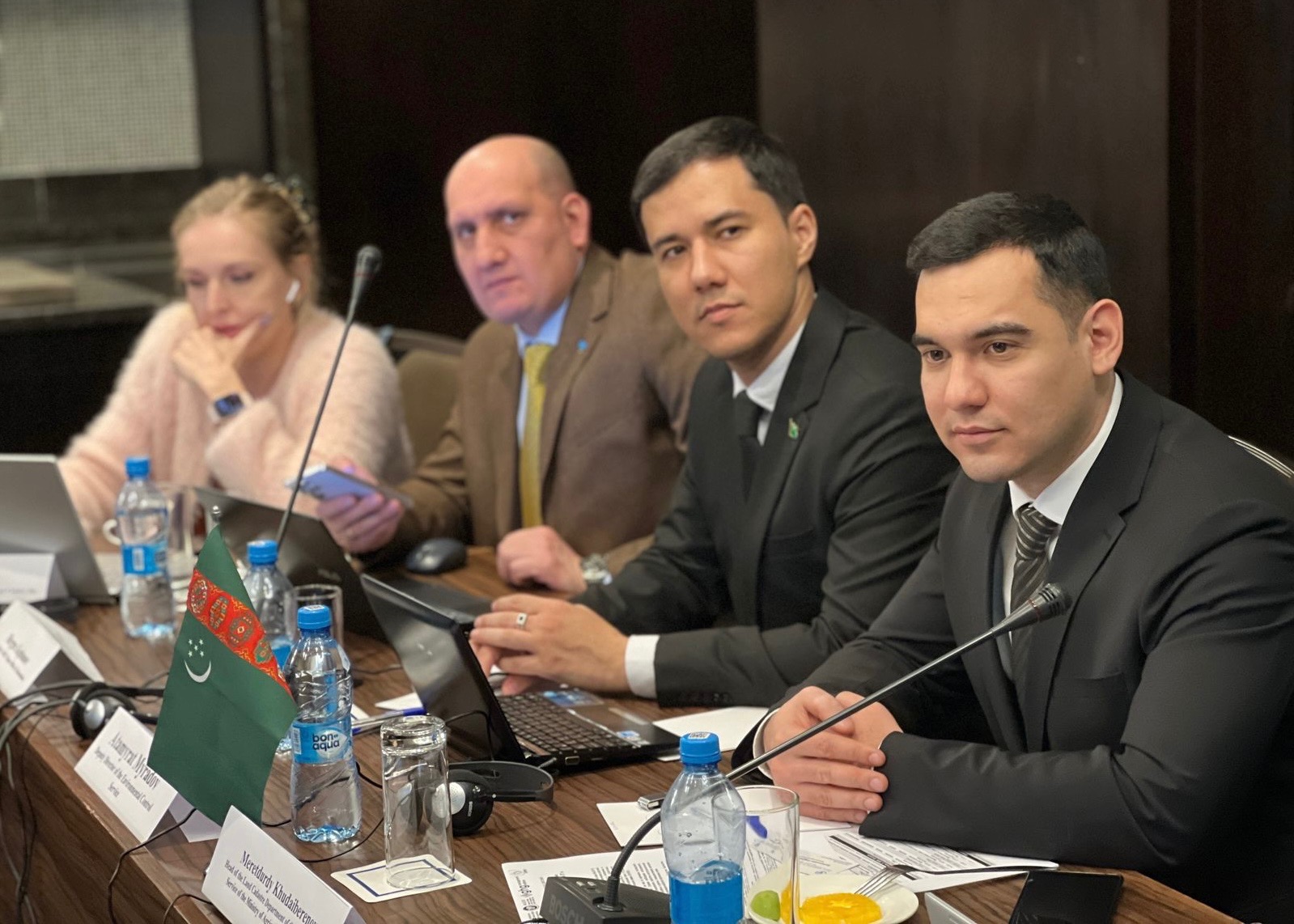 Photo: Regional training on strengthening capacity in greenhouse gas inventory development and policy impact assessment in the LULUCF sector, Dushanbe, Tajikistan, 2-5 February 2026. Credit: CAREC
Through a network of regional experts, dedicated technical working groups and targeted support and capacity-building activities, the ICAT Hub in Central Asia assists governments in strengthening climate transparency to inform policymaking.
The Hub brings together Kazakhstan, Kyrgyzstan, Tajikistan, Turkmenistan and Uzbekistan.
It is hosted by the Regional Environmental Centre for Central Asia (CAREC), based in Almaty, Kazakhstan, and implemented with technical support from the Greenhouse Gas Management Institute (GHGMI).
Under the umbrella of the Central Asia Hub, CAREC is scaling up technical and institutional capacity-building beyond ICAT's scope. This has helped launch new projects to enhance transparency frameworks to tackle methane emissions in the agriculture and oil and gas sectors, funded by the Global Methane Hub, incubated under the Windward Fund, and the Environmental Defense Fund.
ICAT Regional Climate Action Transparency Hub for Central Asia


