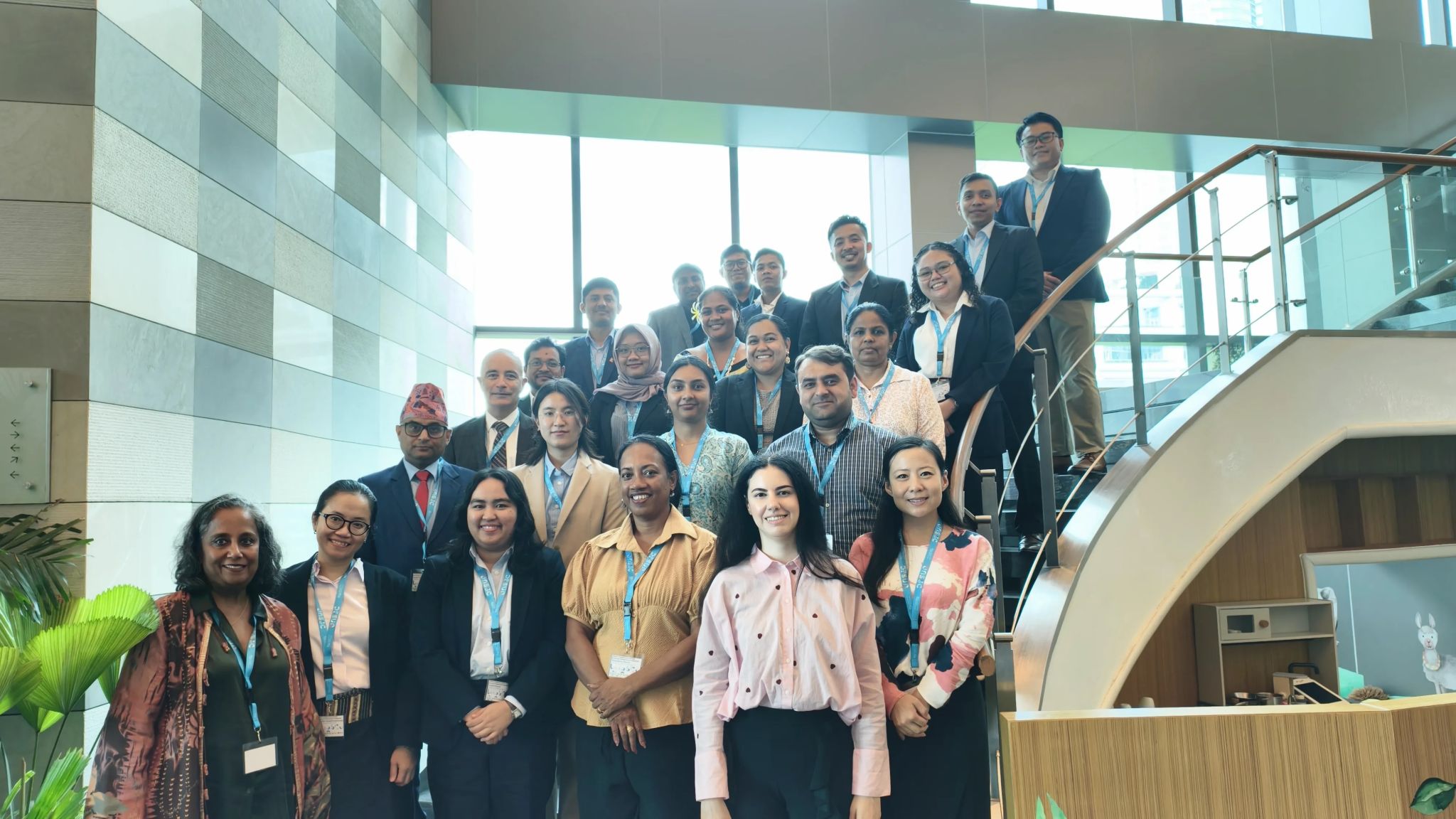
A blended training course for the Asia-Pacific region with a facilitated online part, comprising e-learning modules, exercises and weekly virtual interactive sessions, aims to enhance the capacity of participants to implement the Enhanced Transparency Framework (ETF) under the Paris Agreement. Focus is placed on showing how transparency can help to advance domestic and international climate policy objectives and enable the realization of national priorities and Sustainable Development Goals.
Climate transparency involves collecting data for effective climate action and policy development. It builds accountability and trust, helps to engage stakeholders and enables tracking progress and challenges in achieving the targets set by the Parties to the Paris Agreement. Countries around the world are at varying starting points in developing effective climate transparency frameworks, and there is a significant need and demand for capacity development. In response to this need, an e-learning course has been developed as a collaborative effort between the Initiative for Climate Action Transparency (ICAT), the United Nations Framework Convention on Climate Change (UNFCCC) secretariat, the United Nations Environment Programme (UNEP) through its Copenhagen Climate Centre (UNEP-CCC), and the United Nations System Staff College (UNSSC).
The roll-out of the course in the Asia-Pacific region comes after a successful inaugural round in 2021 targeting Anglophone Africa. Since its commencement on 7 March 2022, 61 participants from 20 countries in the Asia-Pacific region have engaged in the course, which has thus far involved the completion of its 5 core online modules complemented with weekly exchange sessions, where countries, including Indonesia, Sri Lanka, Fiji, Kenya and India, have shared their practical experience. Over the coming weeks, this will be followed by 4 week-long training modules specifically aimed at technical practitioners working with data for climate transparency.
The course is tailored to experts working on climate transparency from a policy perspective or at the technical level and the focus throughout is on how to put concepts and lessons learned into practice while promoting peer-to-peer exchange. This includes:
- Insights into the context of the role of ministries and governments pertinent to the objectives and requirements of the Paris Agreement, and how to implement the ETF in a way that advances both domestic and international objectives;
- An enhanced perspective of the data needs and methods for assessing and reporting on mitigation actions, to enable the development and implementation of effective climate policies and tracking of NDCs;
- An overview on where to access good practice guidance, knowledge resources, methodologies, guidelines and tools related to climate transparency; and
- Background to facilitate the preparation of national institutional arrangements and the mobilization of resources and support for the implementation of the ETF.